Fujifilm
Creative Systems &
Brand Enablement
At Fujifilm, I led creative direction across teams and channels, defining a clear point of view and establishing standards for craft, quality, and intent across the Americas region.
In parallel, I built the systems required for strong creative to scale. That meant reimagining the creative studio, clarifying ownership and planning, and embedding tools and standards that 27 subsidiaries could use with confidence.
This case study focuses on how those systems were designed and embedded to support consistent brand expression across a highly complex organization.
Reimagining a Creative Studio
-
![]()
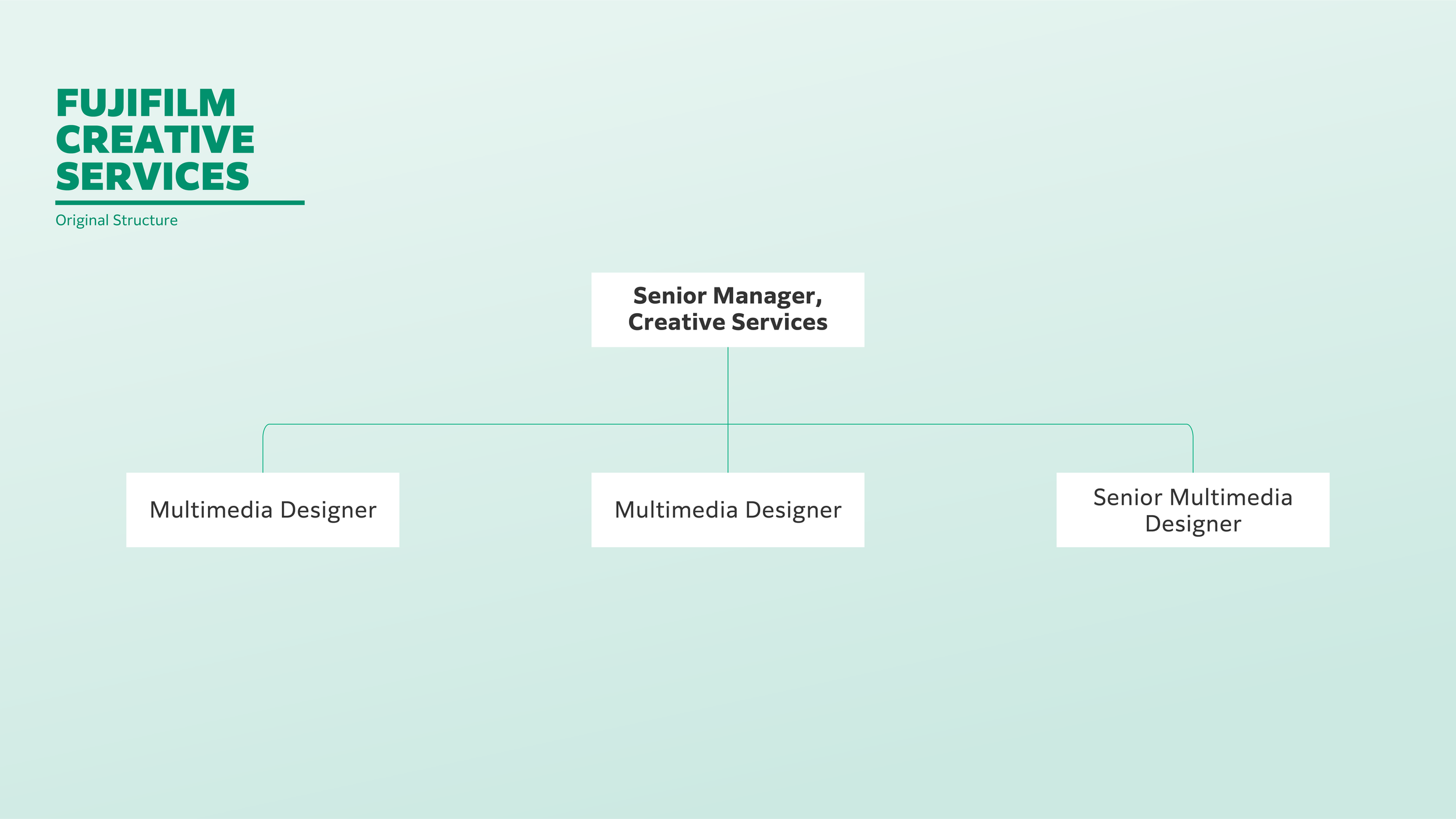
Original Team Structure
The Creative Services team operated without a clearly defined structure or creative model.
Work tended to flow to individuals based on familiarity or past precedent rather than clearly articulated roles, disciplines, or ownership. Creative direction, execution, and decision-making were left to individual designers on a project-by-project basis, making it difficult to establish consistent standards for craft, quality, or intent.
While work was delivered, the team lacked a shared creative framework, defined leadership, and a clear identity as a creative organization within the business.
-
![]()
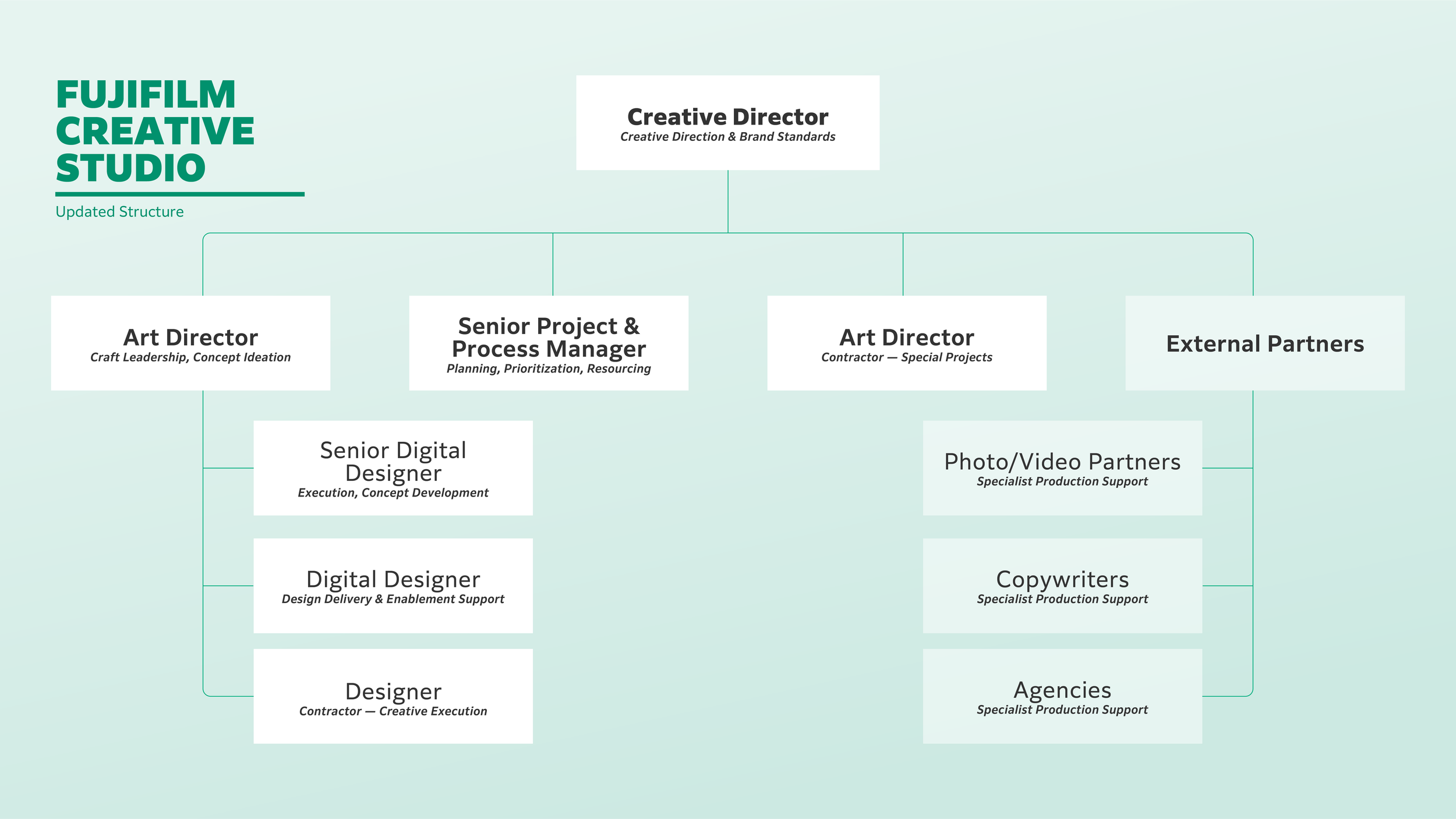
Reimagined Team Structure
The Creative Services team was reimagined as the Fujifilm Creative Studio, with a clear structure, defined roles, and accountable creative leadership.
Responsibilities were clarified across creative direction, design execution, production, and operations, establishing shared ownership for decisions related to craft, quality, and intent.
The studio was planned to balance creative thinking, system thinking, craft depth, and executional capability, allowing ideas to be conceived, refined, and delivered with consistency.
Fujifilm Creative Studio
Resource Planning
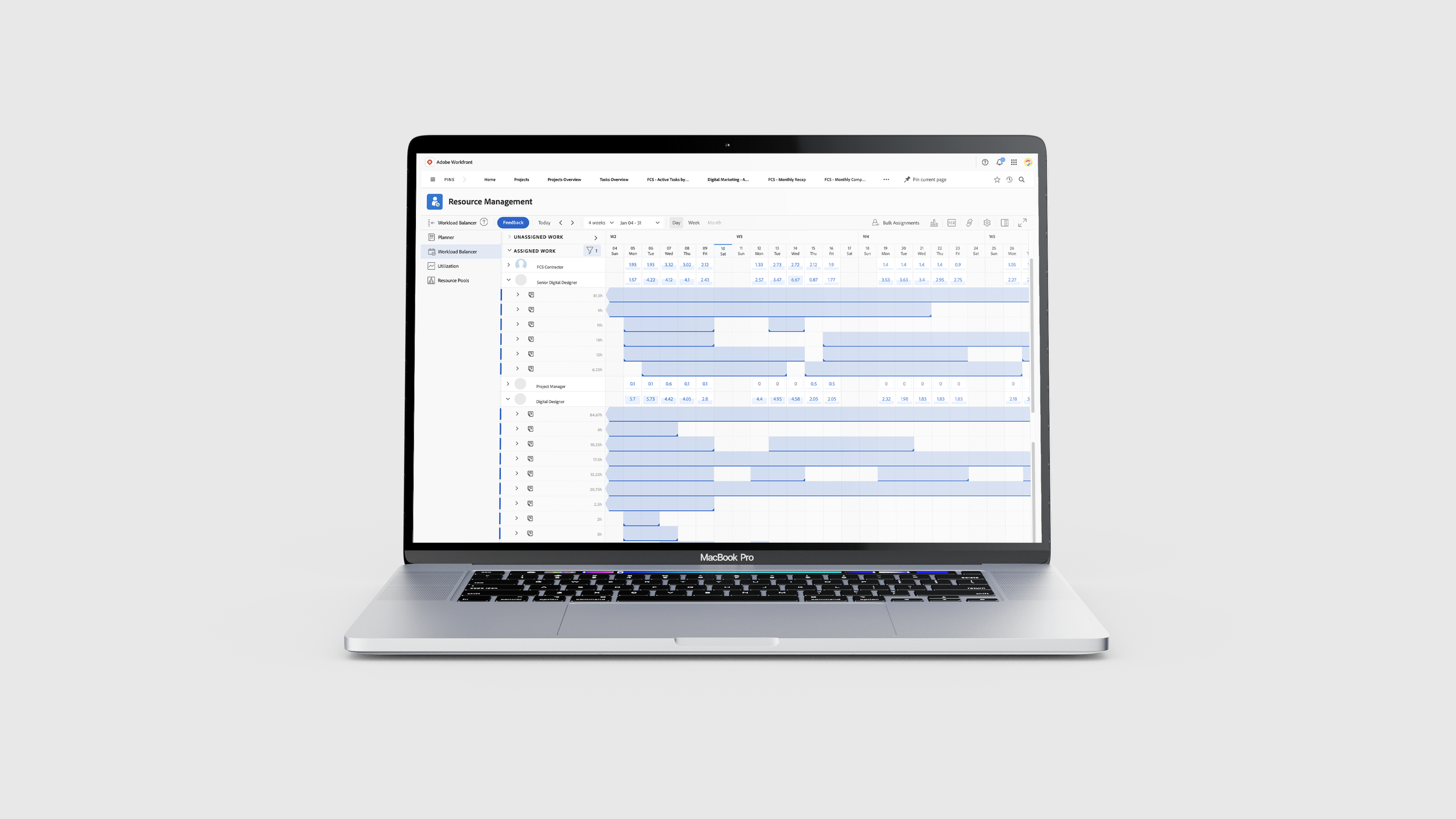
Creative resource planning was redesigned to align work with real capacity rather than assumption.
When I joined, requests were added without visibility into bandwidth, forcing reactive timelines and constant context switching. In partnership with our Senior Project & Process Manager, we implemented structured capacity modeling grounded in real workload data, and later embedded the model into Workfront’s resourcing tools.
This gave the team clear visibility into workload distribution, allowed delivery timelines to reflect actual availability, and created accountability across stakeholders.
As a result, creative could speak clearly about bandwidth, plan proactively, and protect quality without sacrificing speed.
Global Brand Development &
Activation in the Americas
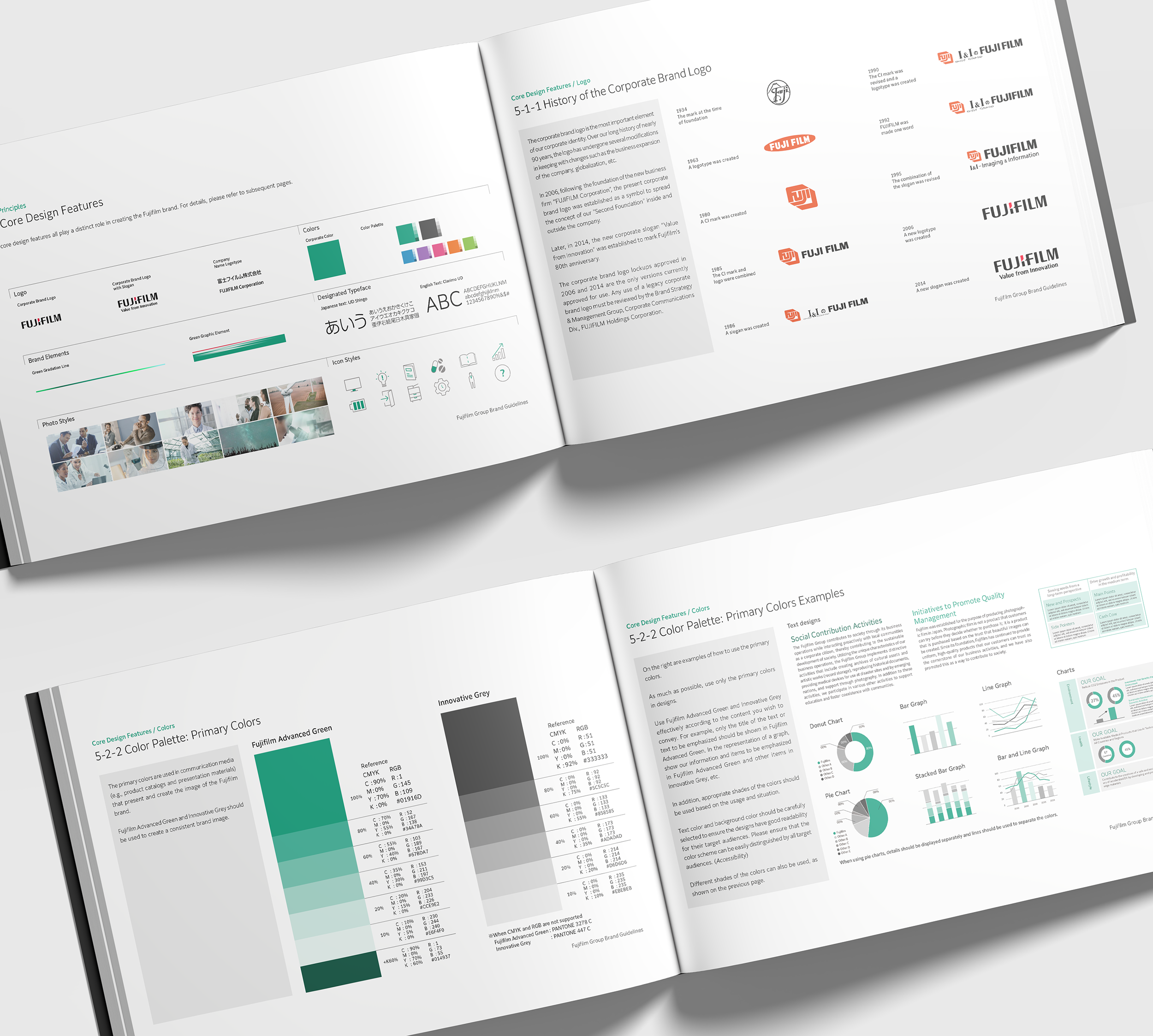
I partnered with Fujifilm’s Tokyo Brand Management team to develop the new global brand guidelines, ensuring the system was complete and adaptable across markets.
Once finalized, I led interpretation and activation for the Americas region, translating global standards into clear, day-to-day application across 27 subsidiaries.
I led rollout planning and delivered more than 35 live training sessions across design, marketing, product, and executive stakeholders for 27 subsidiaries in the Americas and 4 European teams, aligning everyone around shared standards.
To support long-term consistency, I directed the creation of centralized Adobe Creative Cloud Libraries housing approved logos, typography, color systems, and core assets. Rather than relying solely on static documentation, standards were embedded directly into designers’ and marketers’ workflows, creating a single source of truth across the parent company and subsidiaries.
The result was stronger brand alignment, faster decisions, and shared ownership driven by clarity rather than enforcement.
Enablement Through
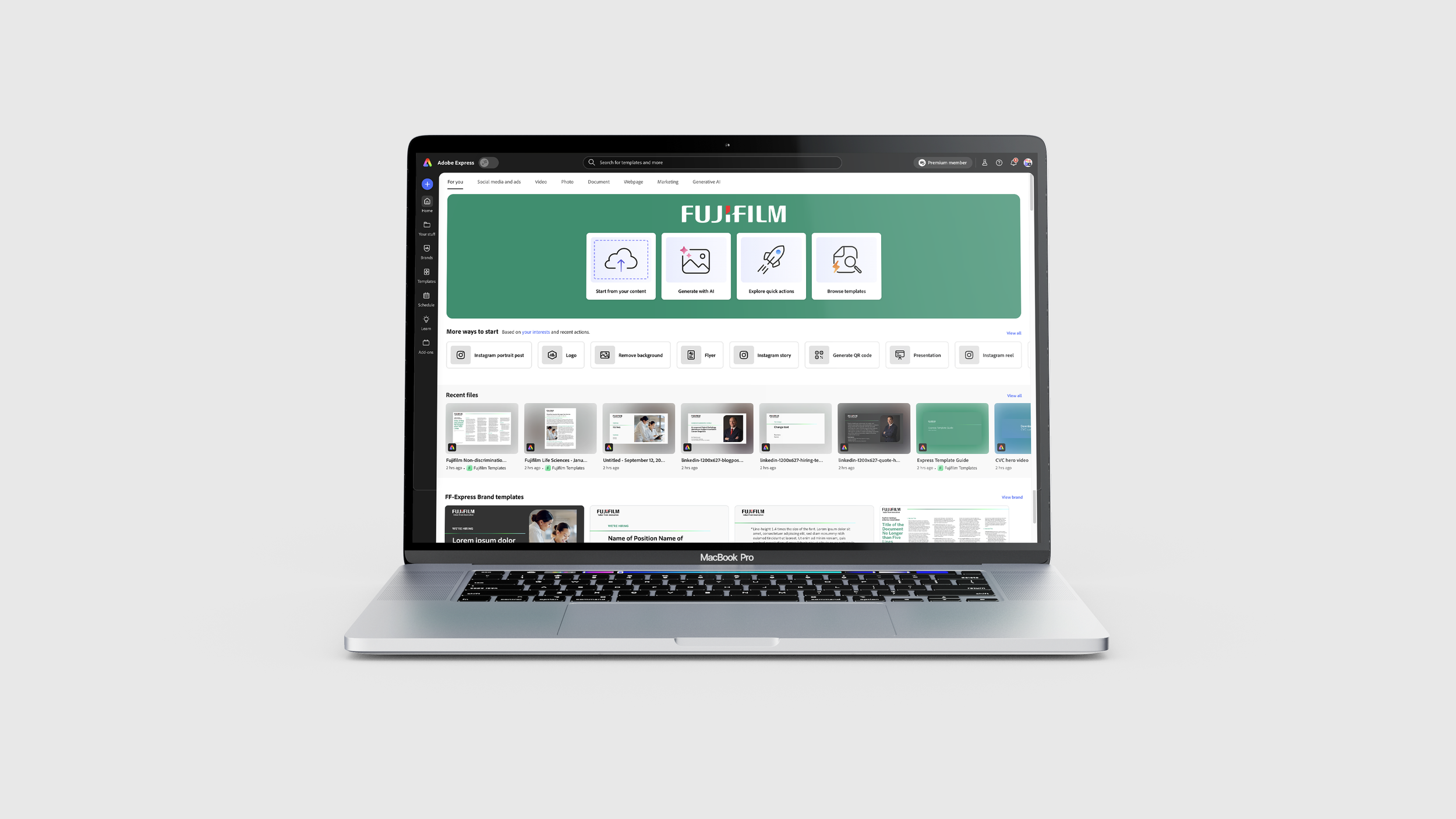
Adobe Express
As demand for brand content increased, non-designers were already creating materials on their own, often using unregulated tools. The issue was not intent, but speed. Teams needed to move quickly, and the centralized creative team could not reasonably absorb every request without becoming a bottleneck.
I led the enterprise adoption of Adobe Express as a scalable solution, partnering with Adobe and internal stakeholders to define how the platform would function within Fujifilm's broader brand design ecosystem. As an early enterprise adopter with access to features before general release, we provided feedback and feature requests during development. This informed the full implementation: consolidating Adobe contracts, establishing a clear governance model, and leading rollout from brand kit configuration through phased deployment and change management, ensuring Express operated within the same standards as the broader brand system.
Working with our Digital Designer, I directed the creation of brand-safe systems within Express: structured templates, approved logos, typographic styling, color usage, and guardrails around design using locking features to help non-designers achieve on-brand results.
Enablement decisions were intentional, designed to support speed without compromising brand integrity.
The result was a shift from reactive production support to structured self-service. Designers focused on higher-value work. Non-designers moved faster with confidence.
Brand standards remained intact, and governance was embedded directly into daily workflows, allowing creative to scale without losing authority or sacrificing speed.
Video & Motion Graphics
System Guidelines
As video became one of the most visible expressions of the Fujifilm brand, execution varied widely across teams, regions, and agency partners. Demand had increased, but shared standards for motion, structure, and branded behavior had not.
To address this gap, I led the development of Fujifilm’s first Video and Motion Graphics Guidelines. The goal was not to limit creativity, but to establish a clear foundation for how the brand behaved in motion. The guidelines defined consistent patterns for timing, hierarchy, and movement, including intros and outros, transitions, lower thirds, and core motion principles aligned with Fujifilm’s visual system.
To support adoption, the guidelines were paired with a practical toolkit. Pre-designed motion assets were delivered as MOGRT files, allowing teams to apply approved elements directly within existing workflows without starting from scratch.
Together, the guidelines and tools brought greater consistency and cohesion to video across the organization, reinforcing a system-driven approach to brand expression without slowing teams down.
Motion Graphics Toolkit in Action
Video Guidelines Document
Adobe Express Social Video Content Template

Creative systems
designed for Brand Governance
By rebuilding the creative studio around structure, standards, and scalable systems, creative at Fujifilm shifted from reactive production support to strategic brand leadership.
Brand expression became more consistent across subsidiaries. Planning became transparent. Stakeholder trust grew. As internal capability matured, reliance on external agencies decreased, allowing the organization to redirect significant budget while improving both speed and quality of output.
Creative was no longer treated as a service function. It operated as a strategic partner with clear authority, operational discipline, and a defined point of view. Stakeholders stopped asking "can creative handle this?" and started asking "what does the team recommend?"
That shift, from execution to partnership, is what I set out to build. The systems and standards created during this period remain in use today.